
10 QUESTIONS WITH KATE HALFPENNY
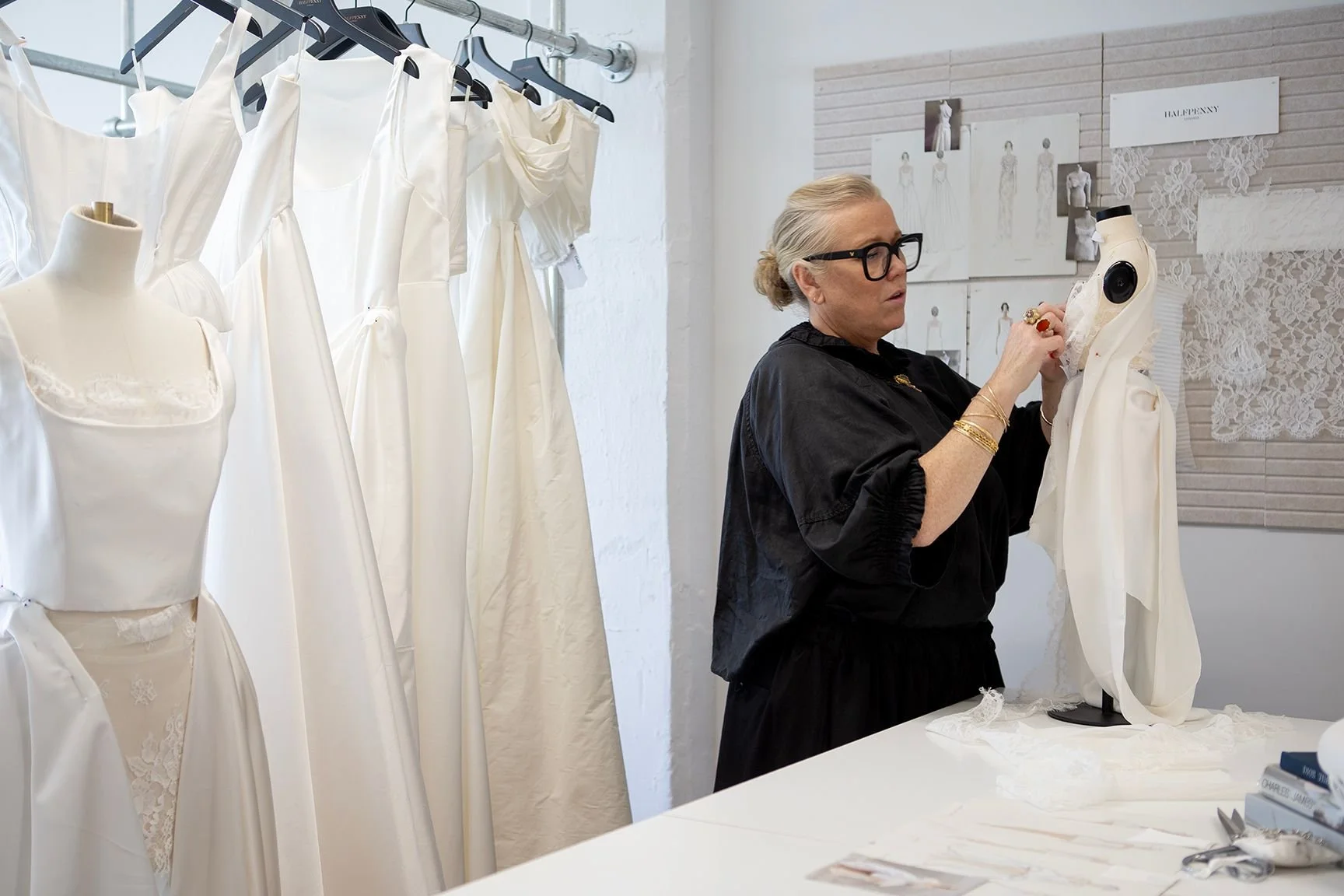
Designer KATE HALFPENNY
1) With a knitwear designer mother and later interning at Vivienne Westwood, what most shaped you as a designer?
Watching my mother work gave me an early understanding that craft is a language. She made things with her hands and they had a life to them, she was so creative. Then Vivienne confirmed something I had always felt instinctively: that clothes are never just clothes. They carry attitude, they push back, they say something about the woman wearing them. That combination, technical rigour and fearlessness, is probably the foundation of everything I have done since.
2) Your graduate collection featured corsets and billowing skirts. Was the Halfpenny London aesthetic already emerging?
Looking back, yes. My final collection at university was actually bridal separates, and the whole show was built around the idea of an outfit transcending from day to night. I wanted to empower the bride from the very beginning, to give her options, agency, a look that could move with her through the day rather than define her. I was drawn to structure beneath softness, the idea that something could be architecturally precise and still feel romantic and free. That tension is still at the heart of every collection I make. The vocabulary has evolved but the grammar hasn't really changed.
3) You styled Kate Moss, Cate Blanchett and Rihanna. What did they teach you about individuality and personal style?
That the most stylish women are entirely unconcerned with what they're supposed to wear. Each of them had an absolute confidence in their own instinct and they trusted it completely. They'd take a piece somewhere unexpected and it would be better for it. That taught me to design with space for the woman to bring herself to the clothes, rather than designing something that leaves her no room. Styling these incredible women really inspired the idea of every woman having the freedom to truly express herself.
4) Creating Emilia Fox's wedding dresses in 2005 helped launch Halfpenny London. How did that moment change your career?
It was the moment I realised that bridal could be the thing I was trying to say all along. Emilia needed dresses that were romantic, that felt like her and not like a costume. When we got it right, it felt significant. There was something in that very personal, high-stakes creative collaboration that I wanted to keep doing. So I did. Her best friend said to me on her wedding day, “you’ve captured her in every stitch of her dress!”…My job was done.
5) Bridal was far more traditional when you started. How has the modern bride changed since then?
When I started, there was an unspoken expectation that a bride would disappear into an idea of what a bride should look like. That's almost entirely gone now. Women today want to look like themselves, only elevated. They've thought hard about who they are and they're not prepared to put that aside for one day. If anything they want that day to be the fullest expression of it. That shift has been wonderful to be part of.
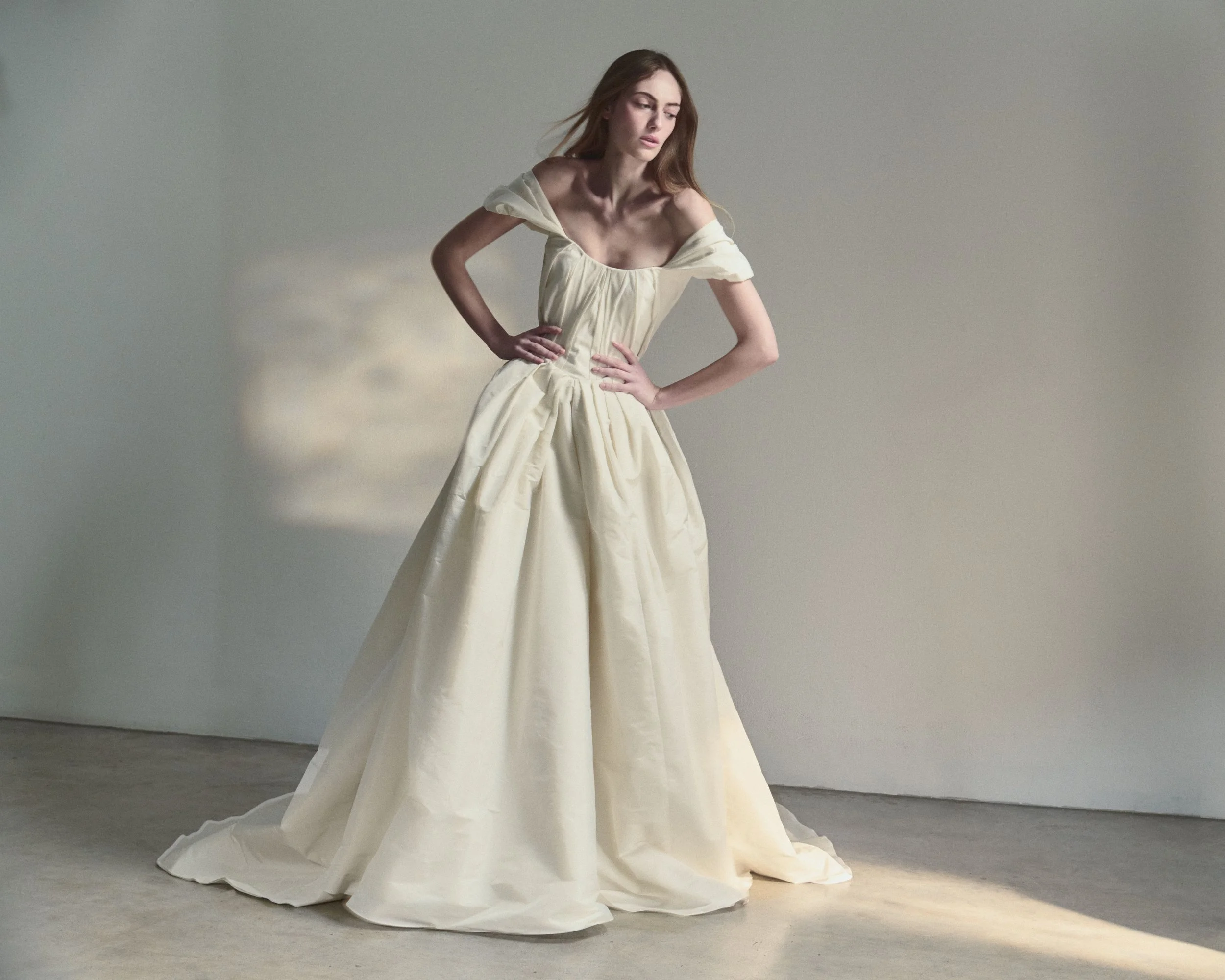
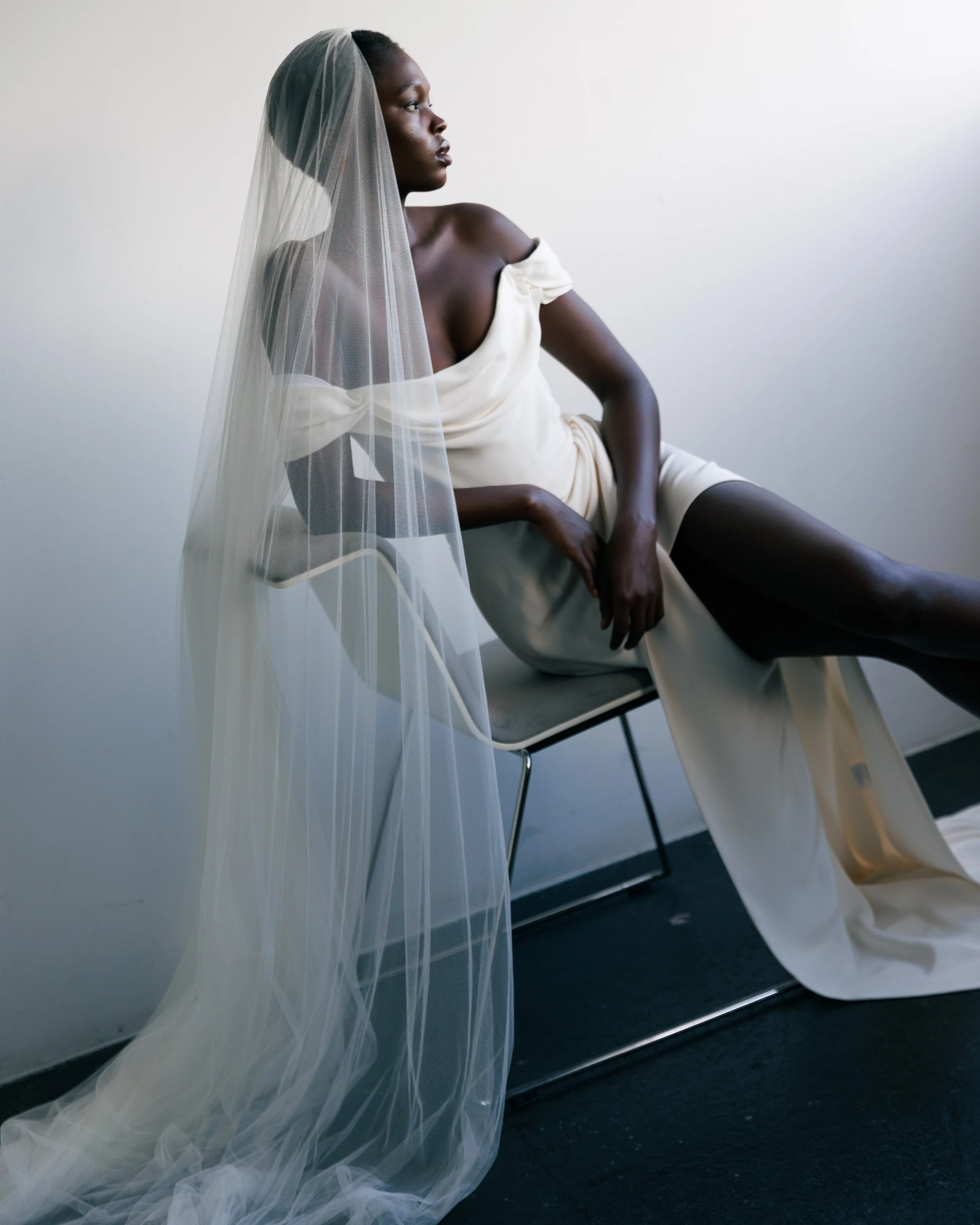
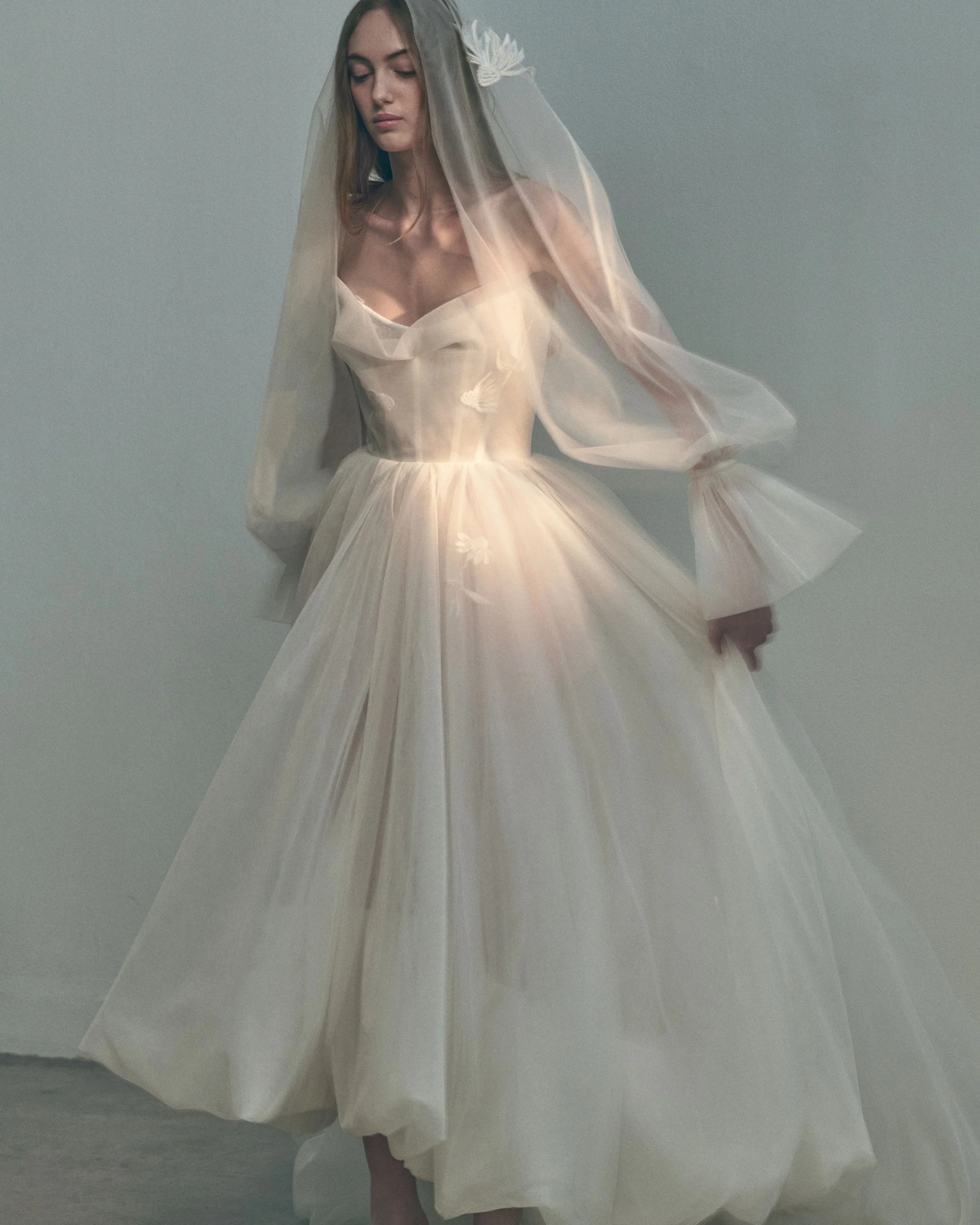

6) You say listening to each bride is essential. What do you want to know about her before creating her look?
I want to understand how she moves through the world, not just what she looks like. What does she reach for every morning? Where does she feel most herself? What's the version of herself she wants to remember on this day? The dress has to hold that. I'm also interested in what she doesn't want, because often that's even more revealing.
7) You describe Halfpenny London as “grown-up glamour, style and romance.” What defines that aesthetic?
It's about beauty that has some intelligence behind it. Pieces that are deeply considered, that reward a second look, that feel luxurious without being obvious about it. I'm not interested in drama for its own sake or in trends. I want to make things that have a kind of quiet confidence, that make a woman feel extraordinary but entirely like herself. Romance is there but it's not saccharine. It has an edge.
8) Why is designing and making your collections in London so important to you?
Because this city is in everything we make. London has this extraordinary layering of influences, the historical and the subversive, tradition and irreverence. Our atelier being here means our clothes are made within that same culture, by craftspeople who share that sensibility. There's also a point of principle. If I'm asking someone to invest in a Halfpenny piece as something they'll keep and pass on, then it has to be made with absolute integrity, from beginning to end.
9) How do your passions for art, interiors and design influence your bridal collections?
They feed it constantly. I find as much inspiration in a painting or a room as I do in a fabric archive. I'm drawn to how things are composed, how light falls, how materials age. An interior that has been lived in well has a quality I want in our clothes: something purposeful, refined, and with a real sense of the person behind it. I think that's why Halfpenny brides often describe their dress as feeling like home.
10) As Halfpenny London joins The Bridal Council, what would you like American brides to discover about the brand?
That there's a different way into bridal luxury. We're a small, fiercely independent house where everything is still made in our London atelier and small production units around London, and that integrity runs through every piece. I'd love American brides to find their way to a Halfpenny dress through a boutique that really understands what we stand for, a place where the experience of finding the gown is as considered as the gown itself.
We are looking to grow our network of stockists across America and will be presenting our collection to wholesale buyers at The Lotte Palace Hotel, New York City from 13 to 15 October.
To view the collection, please reach out to charlotte@halfpennylondon.com